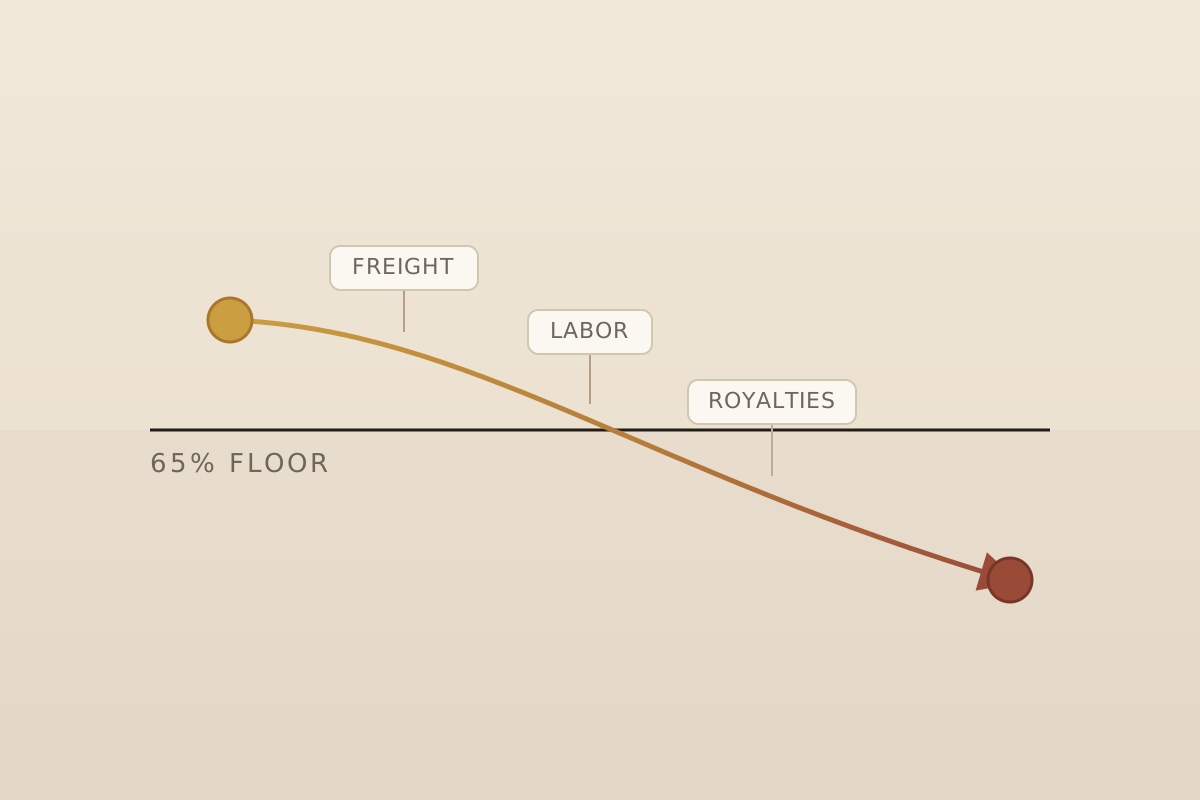
Deals go out below margin when nobody checks true profitability before the quote is sent. The discount looked reasonable, but the real cost to deliver, the freight, labor, services, and royalties, was never fully in the math, so the margin came in under the floor and no one noticed until the numbers were already booked. It is rarely one big mistake. It is usually one of a handful of small, repeatable gaps.
The common failure modes
Most below-floor deals trace back to one of these seven patterns. They all look small in isolation. Together they are how a margin floor quietly erodes across a quarter.
01
The discount cleared the rule, but the margin did not
Most approval rules trigger on discount percentage: anything over 25% off needs sign-off. The problem is that a discount is a proxy for margin, not margin itself. A modest discount on an expensive-to-deliver deal can land below the floor, while the rule, watching only the discount, lets it through. The quote looks compliant and is still unprofitable.
02
The cost to deliver was never fully loaded
A quick margin calculation usually uses COGS and stops there. Real deals carry more: freight, implementation labor, professional services, and royalties on licensed lines. When those are left out, the margin on the quote is flattering and wrong. The deal looks healthy on paper and loses money in delivery.
03
Multi-year and service deals were priced on year one
A multi-year or service-heavy deal can look fine in its first year and erode over the term as delivery cost rises or ramps kick in. If the margin is modeled on year one alone, the floor is being held against the wrong number. The deal that cleared at signing turns out to have been underwater across the full contract.
04
The spreadsheet quietly broke
When margin logic lives in a spreadsheet, it degrades. Formulas get overwritten, a cell reference breaks, a tab gets copied and edited, and a #REF error sits in the corner of the sheet that drives the quote. Nobody is sure which version is current. A deal can go out on math that stopped being correct weeks ago.
05
An override slipped through untracked
Someone makes a one-off exception to close the quarter, drops the price, and tells themselves it is a special case. There is no record, no approval, and no flag. A month later it is a precedent, and three more deals have matched it. Untracked overrides are how a floor erodes without any single decision to lower it.
06
Volume discounts and rebates stacked after the fact
A deal is modeled at a clean margin, then a volume discount, a rebate, or a promotional credit is applied later in the process. Each one is small. Together they pull the deal under the floor, and because they landed after the margin was checked, nobody recalculated.
07
Margin was only reviewed at quarter-end
If the first time finance sees true margin is in the quarterly review, every below-floor deal in that quarter has already shipped. Reviewing margin after the quote is sent is reporting, not control. It tells you what went wrong. It does not stop it.
The pattern underneath
How to close the gap
Closing it is what margin governance does. You set a floor, you measure every quote against the real cost to deliver, you check it automatically at quote time rather than at quarter-end, and you route the deals that fall short for sign-off before they reach the customer. The deals that clear go out freely. The ones that do not get a decision, on purpose, from the right person.