Deal desk vs CPQ
What a CPQ does
CPQ stands for Configure, Price, Quote. It helps a rep assemble a correct, sendable quote: it configures the product or bundle, applies the right price book and discounts, and generates the quote document, often with e-signature and a sync back to the CRM. Some CPQs also route a quote for approval when a discount crosses a threshold. A CPQ is good at making the quote accurate, consistent, and fast to produce.
What a deal desk does
A deal desk is the function, sometimes a team, sometimes a single ops or finance person, that reviews non-standard deals and decides whether they can go out. Its job is the decision, not the document: is this discount acceptable, does this deal clear our margin floor, are these terms ones we can live with, and if not, what needs to change. The output of a deal desk is an approve, rework, or reject, not a quote.
Plenty of deal desks run on spreadsheets, email, and a recurring meeting. A deal lands in someone's inbox, the real margin gets worked out by hand, and the decision comes back hours or days later.
How they compare
| CPQ | Deal desk | |
|---|---|---|
| What it is | Software that builds the quote | A function that approves non-standard deals |
| Main job | Configure, price, and generate the quote | Decide whether pricing, margin, and terms are acceptable |
| Output | A correct, sendable quote | An approve, rework, or reject decision |
| Owns | Quote accuracy and speed | Margin, discounting policy, exception sign-off |
| Usually runs on | A dedicated CPQ tool | Spreadsheets, email, and meetings, until it is automated |
Where they overlap, and where the gap is
The overlap is approvals. A CPQ can route a quote for sign-off, which looks like a deal desk function. But a CPQ routes on discount percentage, not on true margin, and it does not model the full cost to deliver. So the CPQ can tell the deal desk "this is 22% off," but it cannot tell them "this lands at 60% margin, below your 65% floor." The deal desk still has to work out the real number, which is where the spreadsheet chase comes from.
That gap, knowing the real margin at the moment a deal needs a decision, is what margin governance software fills.
Where Dealfloor fits
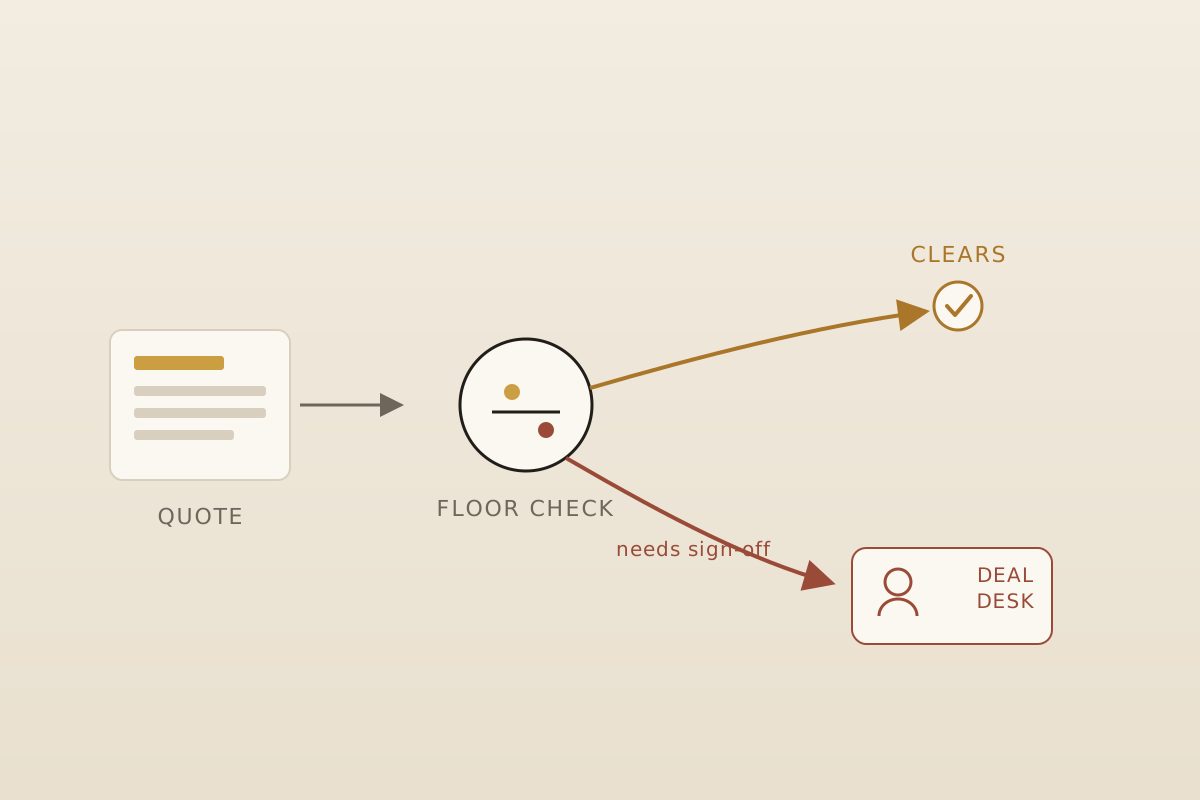
Dealfloor automates the margin part of the deal desk. It calculates the true P&L on every deal, checks it against your floor, and routes the ones that fall short with the full margin picture already attached. The deal desk stops being a spreadsheet chase and becomes a one-click decision: the approver sees the deal, the real margin, the floor it missed, and approves it or sends it back.
It does not replace the CPQ that built the quote, and it does not replace the people who own the policy. It gives the deal desk the real number, automatically, so the decision happens in minutes.
A quick example
A quote comes in at 22% off list and trips the deal desk's review threshold. To decide, the desk needs the real margin. Done by hand, that means opening the cost model, loading in implementation, freight, and any royalties, and rebuilding the P&L, often a day later. With margin governance in place, the deal arrives at the desk with the P&L already built and the floor already checked, so the only thing left is the decision.
For how this differs from a CPQ on its own, see Is Dealfloor a CPQ? For the category itself, see What is margin governance?